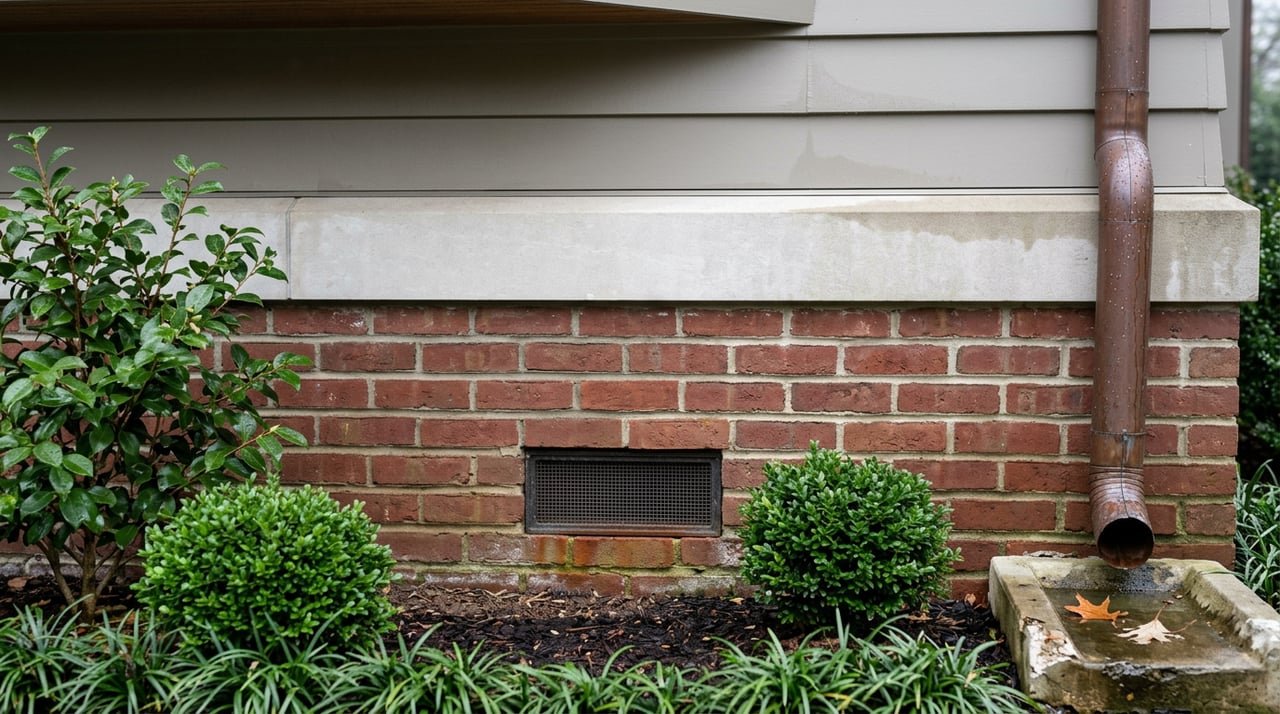
The inspector working a bungalow off Kingston Avenue this fall will spend most of his crawl space time doing two things: running a flashlight along the underside of the joists, and following whatever pipe carries wastewater out toward the street. Neither shows up in a listing photo. Neither is visible from the front porch. And in a neighborhood whose defining bungalow boom ran from 1910 to 1925, both are more likely to be original than replaced.
None of that means the house has a problem the seller couldn't have known about. It means the seller has a choice about when the problem gets found. In North Carolina, that timing decides whether a finding becomes a line on a disclosure form or a renegotiation three weeks before closing.
The Same Finding, Two Different Prices
A section of knob-and-tube wiring or a run of galvanized pipe costs the same to fix no matter who discovers it. What changes is who controls the conversation around it.
Found before the home goes on the market, a defect is information the seller gets to shape. Fix it, price around it, or disclose it plainly and let a buyer factor it into their offer. Found after earnest money has changed hands and a closing date is on the calendar, the same defect becomes a negotiation under time pressure, often with the buyer's inspector and the buyer's lender pushing toward the same conclusion: renegotiate the price or extend the timeline.
| Found before listing | Found during buyer review | |
|---|---|---|
| Who frames the finding | Seller, on their own timeline | Buyer's inspector, on the buyer's clock |
| What it becomes | A disclosure item or a repair decision | A negotiation about next steps |
| Leverage | Seller sets the price around it | Buyer responds under time pressure |
| Effect on closing date | None | Often delays it |
The defect doesn't change between those two columns. Everything else does.
What Actually Shows Up in a House This Age
Dilworth's housing stock is not evenly distributed across decades. The neighborhood's defining Craftsman bungalows were built in a concentrated fifteen-year stretch between 1910 and 1925, including a documented cluster on Kingston Avenue designed by architect Fred L. Bonfoey, according to the National Register nomination filed with the city. Some homes predate that boom considerably. The Helms-Bell House on Euclid Avenue, built in 1899, stands as the oldest home in the district's Euclid and Lyndhurst blocks. That range of build years, Victorian-era to Craftsman to 1920s revival, is exactly why a handful of findings turn up on inspection after inspection across the neighborhood:
- Knob-and-tube wiring and undersized electrical panels, still active in some homes that haven't had a full rewire
- Galvanized steel or cast iron plumbing, which corrodes from the inside and restricts flow long before it fails outright
- Clay or cast iron sewer laterals, which shift with the soil and are prone to root intrusion at the joints
- Crawl space moisture and foundation movement, driven by the Piedmont's red clay, which expands when wet and contracts when dry
- Unpermitted renovation work layered in over a century of ownership: a finished basement, an added bathroom, a converted garage, done without a permit at some point along the way
That last one deserves its own attention, because it's the finding that catches sellers off guard most often. A homeowner who converts a garage or finishes a basement without pulling a permit isn't doing anything unusual in a neighborhood this old. But when that work surfaces during a sale, it becomes a disclosure question.
What North Carolina Actually Requires You to Say
North Carolina's Residential Property Disclosure Act, codified as G.S. 47E, requires most sellers to complete a Residential Property and Owners' Association Disclosure Statement before a buyer signs a contract. According to Nolo, the standard behind it is actual knowledge, not investigation. You are not required to hire an inspector to go looking for problems before you sell. But if a prior inspection, a contractor's invoice, or your own experience with the house has already told you something, that knowledge is what you're disclosing against.
That distinction matters for a Dilworth seller specifically. If you've owned the house for a decade and never had the sewer line scoped, you likely don't have to disclose a defect you don't know exists. If a plumber came out five years ago and told you there was root intrusion in the lateral, that conversation is now part of what you know, whether or not you wrote it down. The law doesn't ask you to go find out. It asks you not to stay quiet about what you've already been told.
Unpermitted work sits in a similar spot but carries more weight, because it's rarely invisible once someone looks. A finished basement without a permit affects appraised value and can create lender complications for a buyer trying to finance the purchase.
The Prep Sequence That Actually Changes the Outcome
The order matters as much as the list itself. Working through these before a home hits the market is what shifts a finding from column two of that table back into column one.
- Pull the permit history first. Before scheduling anything else, find out what work on the house has a permit attached to it and what doesn't. This tells you where your disclosure conversation needs to start.
- Get a sewer scope. A camera inspection runs in the range of the standard add-on pricing local inspectors quote, well under the cost of a repair discovered mid-contract. For a lateral that's a century old, this is the cheapest information you'll buy all year.
- Have the electrical system evaluated. Not every home with knob-and-tube wiring needs a full rewire before selling, but every seller should know exactly what's active in the walls before a buyer's inspector tells them for the first time.
- Gather what you already have. Old inspection reports, contractor invoices, even an email from a plumber years ago. These establish what you knew and when.
- Decide item by item. Fix it, price around it, or disclose it and let the number reflect it. What you shouldn't do is find out for the first time while a buyer is reviewing the house.
A standard home inspection in the Charlotte area runs $280 to $500 depending on the size and age of the house, with specialized add-ons like a sewer scope, radon test, or termite report running another $100 to $300 each. Compared against a renegotiation that reopens price, timeline, and buyer confidence all at once, that's not a large number to spend on certainty.
A Few Questions That Come Up Along the Way
If I don't know something, do I have to disclose it? No. North Carolina's standard is actual knowledge. You're not required to investigate your own house before selling it.
Does Dilworth's historic overlay affect what I have to disclose? No. The Local Historic District review process governs exterior changes and renovation approvals. Property disclosure is a separate legal obligation that applies regardless of a home's historic status.
Is radon something I need to worry about here? Radon zone maps classify Mecklenburg County differently depending on which agency's model you check, and the EPA is clear that county-level zones are not a substitute for testing an individual home. If you haven't tested, it's a low-cost way to close out one more unknown before you list.
Does the disclosure form require a professional inspection? No. You're filling it out based on what you already know, not commissioning new findings. The pre-listing inspection is a separate, optional step, but it's the one that puts you back in control of the timing.
A house built in 1915 was never going to show up on a modern inspection report with a clean sheet. The goal isn't a house with nothing to disclose. It's a seller who already knows what's on the list before someone else hands it to them under contract.
If you're weighing when to start that process on a Dilworth property, Katie Harrison has spent two decades walking sellers through exactly this sequence, from the permit search to the closing table. Let's Connect before you list, not after the first offer comes in.
This article is general information, not legal, tax or financial advice. Consult a qualified professional about your situation.